BP-006: The Third Rome
Are We Witnessing the Foreshadowing of Biblical Prophecy, or Its Fulfillment?
Berean Paper Status
Division:
Christian History, Eschatology and Geopolitics
Classification:
Historical, Scriptural and Contemporary Analysis
Primary concern:
The relationship between the Third Rome doctrine and biblical prophecy.
Abstract
On November 20, 2026, an interview with Russian President Vladimir Putin brought an old theological claim back into contemporary discussion: “Moscow is the Third Rome, a fourth there shall not be.” [1]
What makes this declaration worthy of examination is not simply that Russia has a Christian heritage. The Third Rome doctrine emerged from a particular understanding of biblical prophecy, the fall of empires and the responsibility to preserve Orthodox Christianity. Five centuries later, a president of the country that once promoted state atheism is invoking that same language.
Are we witnessing the foreshadowing of biblical prophecy, or its fulfillment? Or are we witnessing the revival of an old political and religious idea without any necessary prophetic significance? This paper examines the evidence for each possibility.
1. The First Rome
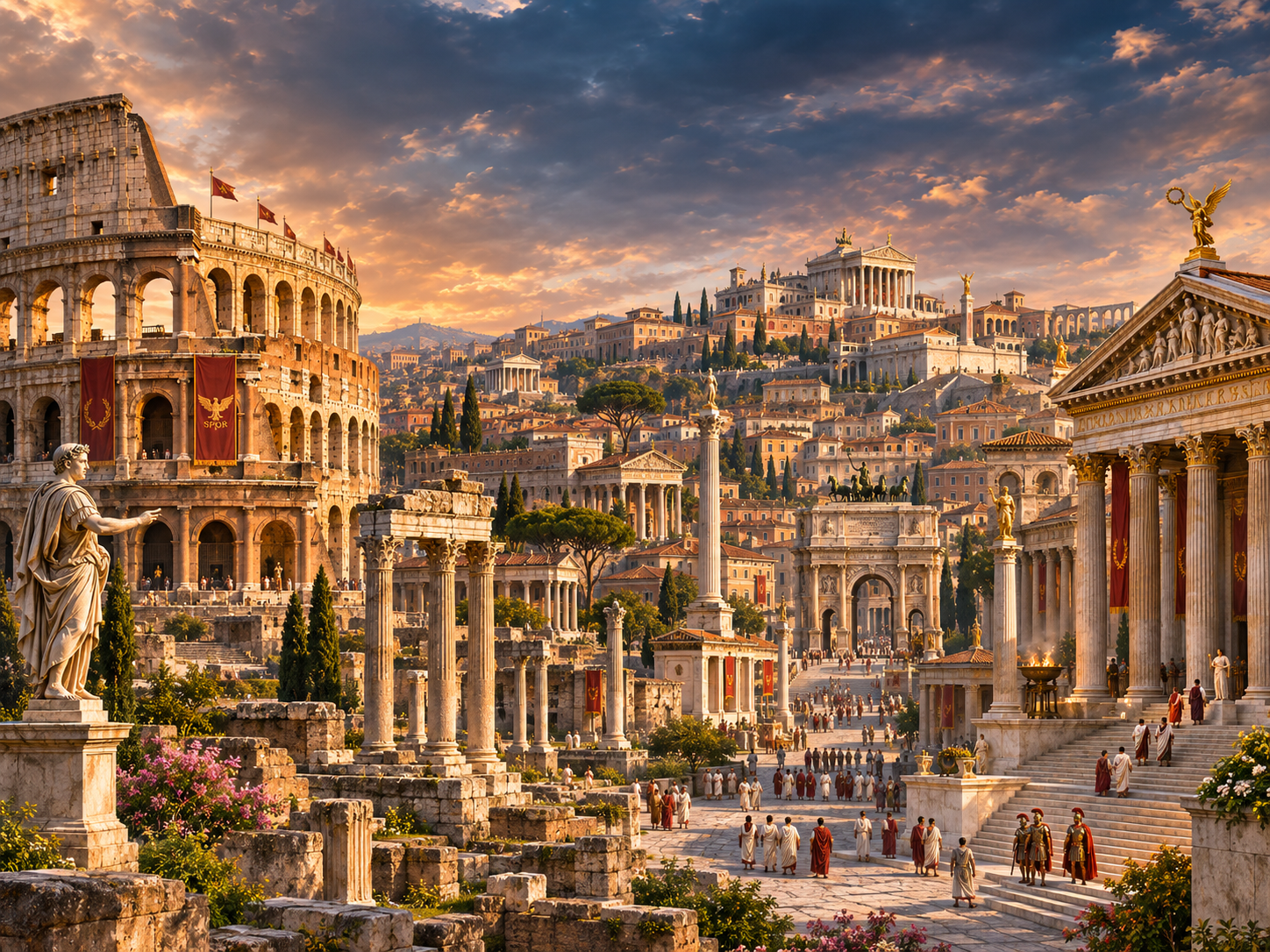
Christianity began in Roman-ruled Judea, not in the city of Rome. Its earliest followers proclaimed a risen Messiah in a world governed by an empire. The Roman state periodically persecuted Christians, yet the faith spread throughout its territories.
In AD 313, Constantine and Licinius established toleration for Christianity. In 380, Theodosius I established Nicene Christianity as imperial religious orthodoxy. The relationship between the church and the state had changed profoundly. The western imperial office ended in 476, but Rome itself survived as a Christian center.
Here lies the first distinction: the survival of Christianity is not the same thing as the survival of a Christian empire. The kingdom proclaimed by Jesus did not depend upon Rome becoming Christian.
2. The Second Rome
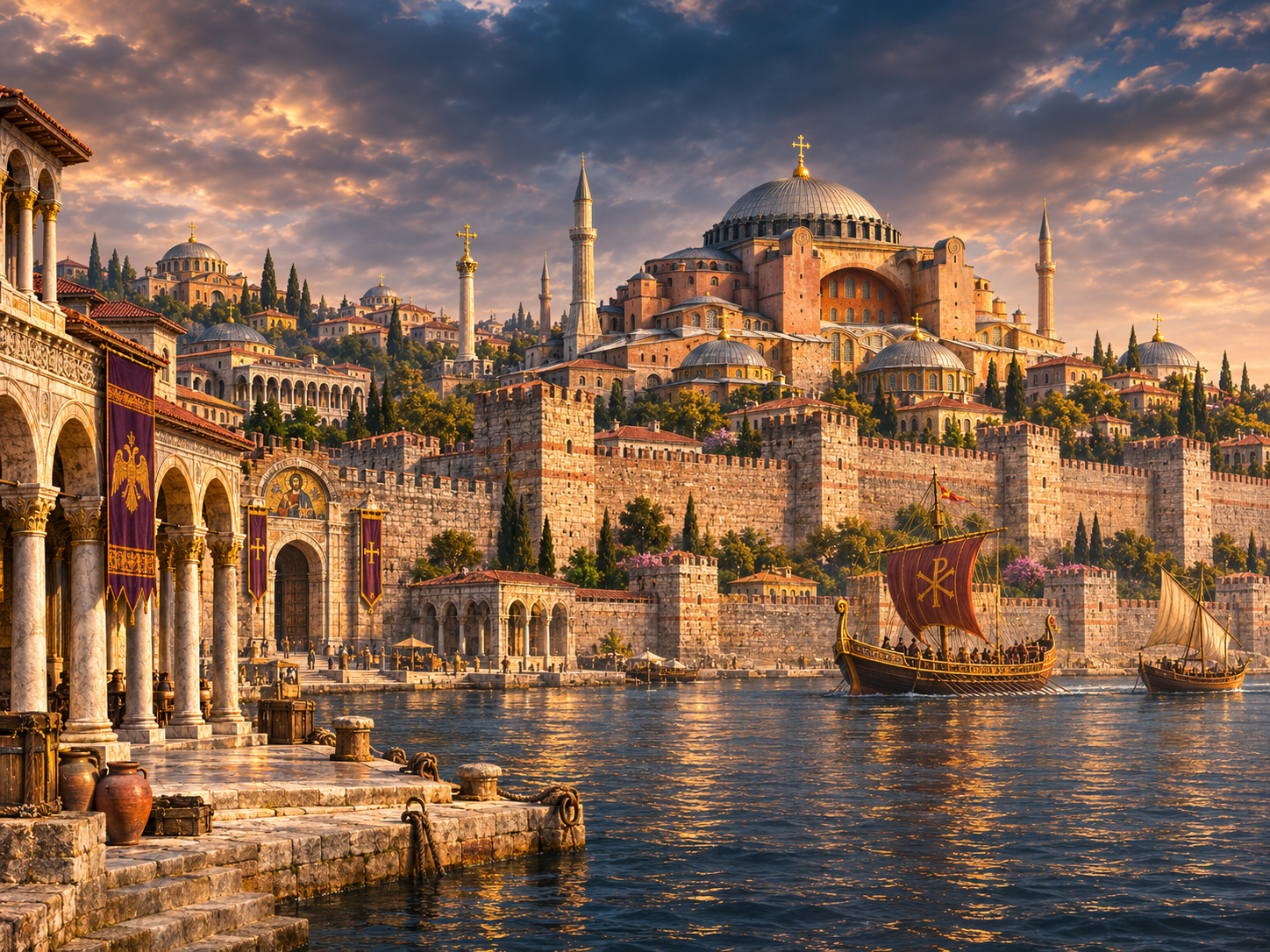
Constantine dedicated Constantinople in 330. The city became the capital of the eastern Roman Empire, which modern historians call Byzantine. Its inhabitants understood themselves as Romans. Hagia Sophia, dedicated in 537 under Justinian, embodied the close relationship between imperial authority and Christian worship.
The separation between the eastern and western churches developed over centuries, with 1054 conventionally marking the Great Schism. [2] The city also suffered conquest by Latin Christian crusaders in 1204, before Byzantine rule was restored in 1261.
On May 29, 1453, Constantinople fell to the Ottoman Empire. The eastern Roman imperial state ended. Orthodox Christianity did not. Constantinople remained an ecclesiastical center, and the fall of the city raised questions elsewhere about the future of Orthodox civilization.
3. The Birth of the Third Rome
The Christianization of Kyivan Rus is traditionally dated to 988, associated with Prince Vladimir and the baptism of his people. This heritage predates Moscow's claim and is shared by peoples of present-day Ukraine, Belarus and Russia. [3]
In the early sixteenth century, the monk Philotheus of Pskov articulated the idea that Moscow stood as a third Rome, following the first two. The Orthodox Church in America describes its development into a powerful religious and political doctrine. [4]
Historian Pavel Kuzenkov, writing for the Moscow Patriarchate, emphasizes its roots in biblical eschatology rather than a straightforward claim to political supremacy. [5] The distinction matters. A responsibility to preserve the faith is not necessarily a mandate to rule the world.
Independent scholarship also cautions against projecting the later political importance of the Third Rome idea back onto its earliest formulations. Its theological origins and subsequent uses need not be identical. [21]
“And in the days of these kings shall the God of heaven set up a kingdom, which shall never be destroyed.”
Daniel 2:44 (KJV) [6]
Could a human empire be that kingdom? Or does Daniel point beyond every earthly government to the sovereignty of God? The Third Rome is a historical interpretation of Scripture, not a phrase found in Scripture itself.
4. From Christian Empire to State Atheism
The Bolshevik Revolution of 1917 ended the old imperial order. Soviet authorities confiscated church property, promoted atheism, restricted religious education and persecuted believers. The Library of Congress documents the Orthodox Church as a principal target of early Soviet campaigns. [7]
Policy was not uniform throughout the Soviet period. Stalin permitted a limited revival of Orthodox institutions during the Second World War, while state supervision and repression continued in varying forms. The Soviet Union dissolved in 1991.
What survived those decades was not the Russian Empire, but religious traditions and communities. Could that distinction help us understand the renewed public language of Christian identity?
5. The Reemergence of Russian Christianity
Pew's analysis of Russian survey data found that Orthodox affiliation rose from 31% in 1991 to 72% in 2008. Yet regular religious participation did not increase comparably. [8] These are historical survey measurements, not estimates of current Russian religious practice.
Russia's constitution establishes a secular state. Its religious legislation recognizes the historical importance of Orthodoxy alongside other traditional religions. The United States Commission on International Religious Freedom also documents restrictions on religious communities in Russia and Russian-occupied Ukrainian territory. [9]
A Christian national identity, freedom of religion and personal discipleship are different measures. None can be substituted for another.
6. The Declaration
Filmmaker Emir Kusturica asked Putin whether Russian civilization might become an ark for believers in Christ. Putin answered affirmatively and invoked the Third Rome. He described some Europeans relocating to Russia to preserve family and religious values, while acknowledging that this movement was not widespread. He extended the ark metaphor beyond Christians, identifying Islam, Judaism, Buddhism and Orthodoxy as traditional Russian religions. [10]
The distinction is important: Kusturica introduced the ark metaphor; Putin introduced the Third Rome doctrine in his answer. The occasion was an interview for a film about Patriarch Kirill, not a formal declaration of a new national policy.
Read the Primary Source
Vladimir Putin’s interview with Emir Kusturica — November 20, 2026
His account of Christianity originating in ancient Rome requires clarification: the faith originated in Roman Judea. His broader claim concerns the transmission of Christian tradition through the Roman and Byzantine worlds to Russia.
Does this represent a renewed claim to cultural leadership, an expression of religious conviction, a geopolitical strategy, or several of these at once? The words establish a public position, not proof of a private motive or a divine commission.
7. The Shining City Upon a Hill
Read the complete archived interview.
In his farewell address on January 11, 1989, Ronald Reagan recalled the image of a “shining city upon a hill.” [11] His vision emphasized liberty and opportunity. It drew on a historical American use of the imagery found in Matthew 5:14. [12]
Christian affiliation in the United States has declined over decades. Pew's Religious Landscape Study measured 78% Christian and 16% unaffiliated in 2007, compared with 62% and 29% respectively in 2023 and 2024. The Christian share has been relatively stable since 2019, according to the same research. [13] European Christian disaffiliation is likewise documented. [14]
Is Russia attempting to present itself as a shining beacon on the hill for people who want to preserve Christian tradition? If so, how should that claim be tested? The words of Christ concern the witness of His followers, not an exclusive national franchise on the gospel.
8. A Geopolitical Realignment?
The fall of Constantinople to the Ottoman Empire gives the Third Rome doctrine a historical relationship to Christian and Muslim political powers. But modern states do not divide neatly along religious lines. Russia has substantial Muslim communities and Putin's interview explicitly includes Islam in his account of national tradition.
Political Islam refers to diverse movements seeking a political role for Islamic principles. It is not synonymous with Islam, Muslims generally, or violent jihadist organizations. Religious identity may influence international relationships without determining them. Russia's conflict with Ukraine, where Orthodox Christianity also has deep roots, is an immediate reminder of this complexity. [15]
In October 2018, Moscow broke Eucharistic communion with Constantinople amid the dispute over Ukrainian church independence. Constantinople granted autocephaly to the Orthodox Church of Ukraine in January 2019. [22] This dispute raises a question for the Third Rome claim: can spiritual succession be established by national assertion when Orthodox churches themselves disagree about ecclesiastical authority?
Could civilizational identity become a more prominent factor in future alliances? That is a question to investigate, not grounds to declare an inevitable religious war.
9. The Final Chapter: Power, Mortality and Legacy
Every man eventually confronts the limits of his own existence. Some may cling more tightly to what they possess. Others may reconsider the significance of what they have accumulated. Power, however extensive, cannot purchase another day of life.
Scripture supplies different examples of how people finish. Solomon's later years warn against spiritual compromise (1 Kings 11). Nebuchadnezzar's humiliation challenges human pride (Daniel 4). Hezekiah confronts the prospect of death (2 Kings 20). Paul describes finishing his course and keeping the faith. [16]
“I have fought a good fight, I have finished my course, I have kept the faith.”
2 Timothy 4:7 (KJV)
Why Third Rome, and why now? A leader contemplating the legacy of his life may consider what will survive his time in power. Some leaders become more determined to consolidate power; others reconsider their priorities. We cannot know whether either describes Putin. We can hear what he says, observe what he does and examine the consequences.
Jesus directs attention to observable conduct: “Wherefore by their fruits ye shall know them” (Matthew 7:20), and identifies love among His disciples as a mark of their discipleship (John 13:35). [23] These principles invite examination of professions of faith, not speculation about another person's heart. Profession is a claim. Conduct is evidence.
History can attach significance to an action beyond what its author intended or understood. Isaiah 45 describes Cyrus as an instrument of God's purpose even though he did not know God. [24] This establishes a biblical precedent for considering the distinction between human intention and divine purpose; it does not identify Putin with Cyrus or establish a prophetic role for him.
Whether the renewed invocation of the Third Rome carries historical, political or prophetic significance remains open to examination. We cannot see another man's heart. God can.
10. The Biblical Prophetic Landscape
Daniel 2 and 7 describe kingdoms and divine dominion. Ezekiel 38 and 39 describe Gog and a coalition opposed to Israel. Zechariah 12 and 14 center on Jerusalem and divine intervention. Revelation draws heavily on these older prophetic images.
Jewish messianic interpretation is relevant here. Maimonides, in Mishneh Torah, Kings and Wars , chapter 12, discusses Gog and Magog in relation to the messianic age while cautioning against treating uncertain details and chronology as settled knowledge. [17] Jewish expectations of the Messiah and Christian belief in Jesus as Messiah differ substantially; the shared prophetic texts should not obscure that difference.
Characters on the prophetic stage
| Figure or power | Scripture | Role in the text |
|---|---|---|
| Son of man / Messiah | Daniel 7:13-14; Revelation 19:11-16 | Everlasting dominion; Christ in Christian interpretation. |
| Little horn | Daniel 7:8, 20-25 | Arrogant power opposing the saints. |
| Kings of north and south | Daniel 11 | Rival kingdoms; historical and future readings differ. |
| Gog of Magog | Ezekiel 38-39 | Enemy coalition against restored Israel. |
| Man of lawlessness | 2 Thessalonians 2:1-12 | Self-exaltation and deception. |
| Beast and second beast | Revelation 13 | Coercive rule and allegiance; the second beast is associated with the false prophet. |
| Ten kings | Revelation 17:12-14 | Rulers who give authority to the beast. |
| Babylon | Revelation 17-18 | Corrupt wealth, power and opposition to God. |
| Kings from the east | Revelation 16:12-16 | Appear in the gathering associated with Armageddon. |
| Gog and Magog | Revelation 20:7-10 | Nations gathered for the final rebellion. |
The table is an index of passages, not an asserted sequence or a list of modern identities. Daniel 11 has strong historical connections to struggles between Hellenistic kingdoms. Some Christian readings anticipate further fulfillment. Revelation has preterist, historicist, futurist and idealist readings, which can also overlap. The text does not name Putin, Moscow, Russia or the United States.
Some futurist interpreters associate Gog with Russia. The resemblance between the names Rosh and Russia does not establish a historical or linguistic identification. Revelation 20 reuses the names Gog and Magog for a rebellion involving nations from across the earth. We should not assume that every prophetic image is a separate modern political figure, or that similar images necessarily refer to the same event.
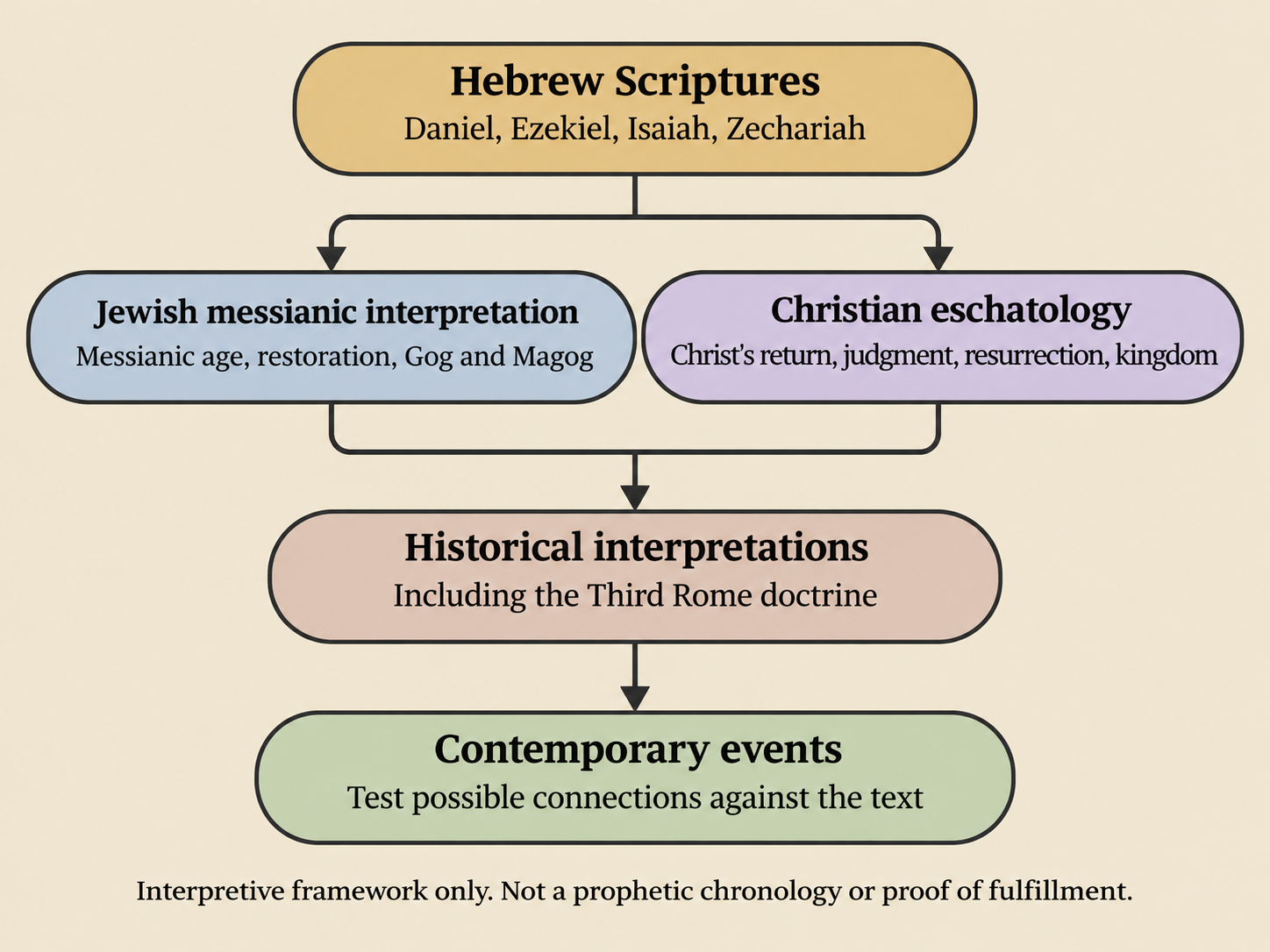
Matthew 24 warns of conflict and deception, but also cautions that wars do not by themselves establish that the end has arrived. [18] The same chapter denies knowledge of the day and hour. [19] Could present developments be preparatory? What would distinguish such preparation from another recurrence of ordinary history?
11. Foreshadowing or Fulfillment?
Foreshadowing?
Could changing national identities and alliances create conditions relevant to events described in prophecy without constituting those events?
Fulfillment?
Is there a specific passage whose actual conditions have been met? What evidence would be required to make that identification?
Neither?
The revival of Third Rome language may be explained by political legitimacy, cultural identity, religious tradition or historical memory without any particular prophetic significance. If ordinary historical and political explanations account for the evidence, what independent scriptural grounds would justify a prophetic reading?
Testing the claims
Apply the same standards to every nation claiming Christian identity: freedom to worship or dissent; treatment of religious minorities; conduct toward neighbors; the independence of religious institutions; and consistency between public professions and observable actions. These are tests of conduct, not a numerical measure of faith or proof of prophecy.
A proposed prophetic identification should specify the relevant passage, its conditions and what evidence would count against it. If an interpretation requires changing the meaning of the text whenever events fail to fit, or if its essential conditions are contradicted, that interpretation should be reconsidered. A historical resemblance alone is not enough.
Jesus said that His kingdom is not of this world. [20] That statement should discipline our examination of every nation, including America and Russia.
Questions for the Berean
- Does the Third Rome doctrine reflect Daniel's intended meaning or a later application of it?
- Does Russia’s public Christian identity support, challenge or have no bearing on proposed prophetic interpretations?
- Does the imagery of Revelation describe political systems, individuals, recurring patterns, future events, or some combination?
- How would we distinguish a nation's claim to defend Christianity from its actual treatment of believers and neighbors?
- What evidence would cause us to abandon a favored interpretation?
Foreshadowing, fulfillment, or neither?
We do not have to know the final act to recognize that the stage deserves our attention.
Read. Reason. Search. Test.
12. Notes and References
- President of Russia, interview with Emir Kusturica for Our Baptism. The Patriarch, November 20, 2026. Open source ↩
- Pew Research Center, Religious Belief and National Belonging in Central and Eastern Europe, 2017 (historical background). Open source ↩
- Orthodox Church in America, The Orthodox Faith: Saint Vladimir of Kiev (church-historical account). Open source ↩
- Orthodox Church in America, The Orthodox Faith, Sixteenth Century: Russia. Open source ↩
- Pavel Kuzenkov, The Third Rome: From Eschatology to Political Myth. Open source ↩
- Daniel 2:31-45 (KJV). Open source ↩
- Library of Congress, Revelations from the Russian Archives: Internal Workings of the Soviet Union. Open source ↩
- Pew Research Center, Russians Return to Religion, But Not to Church, 2014. Open source ↩
- USCIRF, Russia Country Brief, November 13, 2026. Open source ↩
- Faith That Thinks, archived English-language interview transcript, November 20, 2026 (originally published by the Kremlin). Open source ↩
- Ronald Reagan Presidential Library, Farewell Address to the Nation. Open source ↩
- Matthew 5:14-16 (KJV). Open source ↩
- Pew Research Center, 2023-24 Religious Landscape Study. Open source ↩
- Pew Research Center, Religion in Europe, 2010 to 2020. Open source ↩
- Pew Research Center, Ukrainian, Russian church split reflects political importance of Orthodox Christianity, 2019. Open source ↩
- 2 Timothy 4:6-8 (KJV). Open source ↩
- Maimonides, Mishneh Torah, Kings and Wars 12:2, Sefaria. Open source ↩
- Matthew 24:4-14 (KJV). Open source ↩
- Matthew 24:36 (KJV). Open source ↩
- John 18:36 (KJV). Open source ↩
- Nick Mayhew, Moscow: The Third Rome (2021), University of Glasgow research repository. Open source ↩
- European Parliament Research Service, Ukraine: Religion and (geo-)politics: Orthodox split weakens Russia’s influence (2019). Open source ↩
- Matthew 7:15–20 and John 13:34–35 (KJV). Open source ↩
- Isaiah 45:1–7 (KJV). Open source ↩
Read the passages. Examine the reasoning. Test the claims. Keep what survives.
Read. Reason. Search. Test.